
Checking Criminal History in Chicago
A Chicago record check starts with the event and the likely custodian. The Chicago Police Department keeps its incident and arrest products. The Circuit Court clerk keeps the judicial file. The Cook County Sheriff tracks people processed into county custody. ISP’s CHIRP channel returns public Illinois conviction information, not the full Chicago police or court file.
- Search CPD’s official adult arrest system when the event was a Chicago police arrest.
- Request the incident or arrest report from CPD Records Services or through CPD FOIA.
- Search the Cook County CCCPortal and use the Chicago clerk counter for filed charges and dispositions.
- Check the Sheriff locator or call jail information when current county custody matters.
- Use ISP CHIRP for a statewide public conviction response or ISP Access and Review for your own fingerprint record.
These channels can disagree without any one of them being false. They cover different stages. Use a name plus date of birth, arrest date, case number, CB number, RD number, or IR number when available.
For personal record review, the state route differs from a public name search. ISP directs people to its Access and Review process and licensed live-scan vendors for a fingerprint-linked copy of their own Illinois record. The vendor needs the correct request purpose and identification. Charges vary, so use ISP’s current vendor list rather than relying on an old Chicago price.
Chicago Adult Arrest Search Since 2014
The CPD Adult Arrest Search covers adults arrested by Chicago police on or after January 1, 2014. It does not cover Cook County Sheriff arrests, Illinois State Police arrests, juvenile records, or arrests made by suburban departments. Search inputs include name, Central Booking number, and date filters.
| System | Inputs | Returns | Main Limit |
|---|---|---|---|
| CPD Arrest Search | Name, CB number, dates | Arrest, charge, photo, release, bond, police geography | Adult CPD arrests since 2014 |
| CPD FOIA Form | RD, CB, IR, date, place, subject | Requested incident, arrest, or identification record | Redactions and exemptions apply |
| Cook CCCPortal | Case number, name, available filters | Filed case and docket | Not the CPD narrative or statewide history |
The official API help warns that recent data can lag by several days. A new Chicago arrest may therefore exist before the public interface shows it.
Chicago Police Department Records
The Chicago Police Department Records Services Division is at 3510 South Michigan Avenue, Chicago, IL 60653. The public counter hours stated on CPD form 31.509 are Monday through Friday, except holidays, from 8 a.m. to 3 p.m. The form separates reports by identifier and asks the requester to describe the exact record sought.
The official department page provides the source view of the agency responsible for Chicago police records.
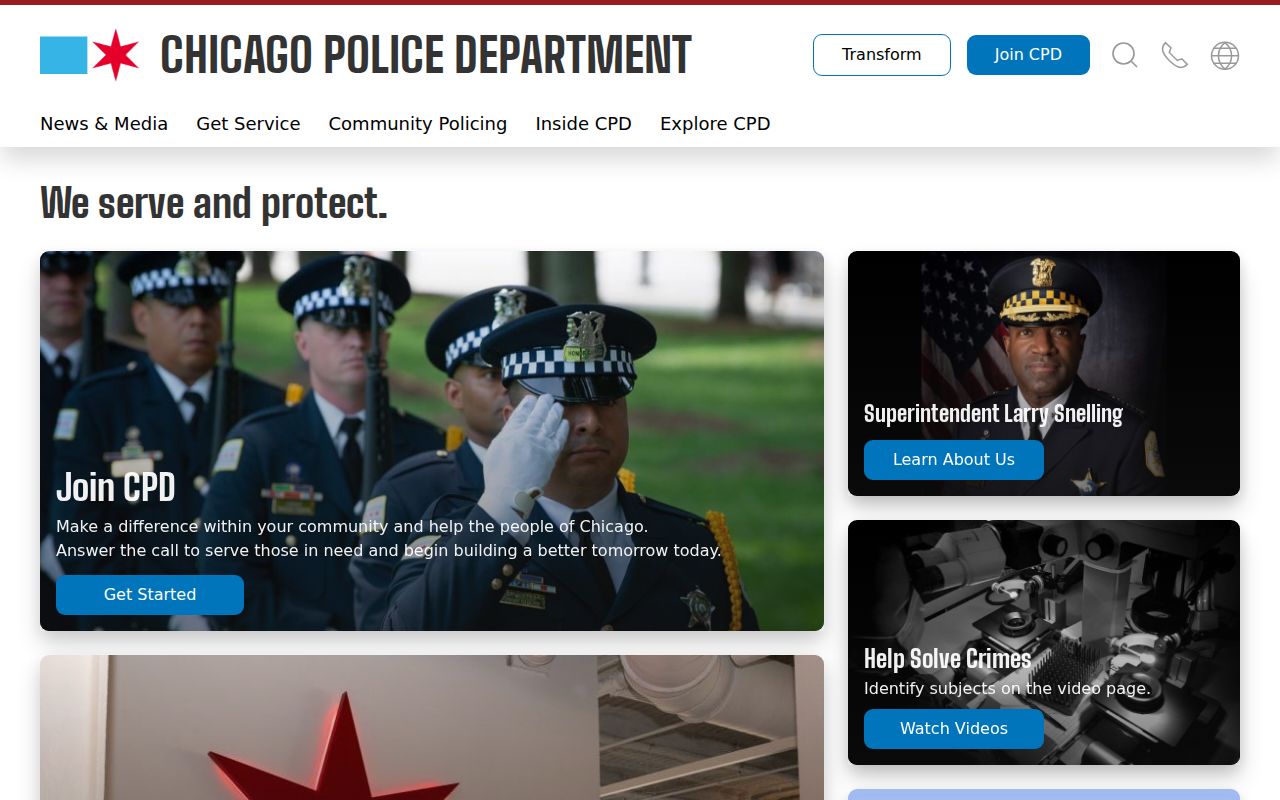
Reports do not move to the Sheriff merely because a person later enters Cook County Jail. CPD remains the custodian of its police narrative and arrest record.
CPD’s form also helps separate a routine copy request from FOIA. If a report is available through the normal records process, follow that path. If the material is not routinely released, describe it in a written FOIA request. Ask for an electronic copy when practical and state a narrow date range so staff can locate the Chicago record.
CPD Records Services Division
3510 S. Michigan Ave.
Chicago, IL 60653
Public counter: Monday through Friday, except holidays, 8 a.m. to 3 p.m.
Chicago CB, RD, and IR Numbers
Chicago records use several identifiers that should not be swapped. An RD number identifies a Records Division incident report. A CB number identifies a Central Booking arrest. An IR number points to an identification record. CPD form 31.509 requests each in a separate part of the form.
- RD number
- The report identifier tied to a police incident or case report.
- CB number
- The Chicago Central Booking identifier for an arrest event.
- IR number
- The CPD identification-record number associated with a person.
- Circuit Court case number
- The clerk’s identifier for filed charges and judicial events.
If no identifier is known, give the date, time, exact location, subject, and record type. A precise request helps the records staff distinguish an arrest record from an incident narrative or identification product.
Chicago Arrests and Bookings
CPD creates the Chicago arrest artifact. If detention follows, the person may proceed through pretrial court and into Cook County Department of Corrections custody. The Sheriff locator generally publishes a processed booking four to six hours after intake. A person released after bond or pretrial court may never reach full jail processing or receive a jail photograph.
Use CPD first for a Chicago police arrest, then the Sheriff’s individual-in-custody locator for current county custody, and CCCPortal for charges filed in court. Jail information is available at 773-674-5245 when the locator is too early or identifiers need confirmation. A blank jail result does not erase a CPD arrest.
The California Avenue systems answer different questions. The jail line can help locate a person after transfer. The Leighton court schedule addresses hearings and filed cases. CPD still owns the city arrest report. Ask which agency made the arrest before choosing among them, especially when an event occurred near a Chicago boundary or on an expressway.
Note: CPD’s newest online arrest data may lag days, while the county jail locator describes an hours-long processing delay.
When Chicago Arrest Results Are Empty
First check the date. Events before 2014 fall outside the CPD adult arrest search. Next check the agency. Sheriff’s Police, ISP, Cicero, Elgin, and every other suburban department fall outside CPD’s system. Then allow for a recent-data delay and try the CB number rather than a name variation.
For an older or missing event, submit the CPD records request form or a written FOIA request. Mail requests for report copies require the details listed by CPD, a self-addressed stamped envelope, and payment in the accepted form. CPD’s published guide lists $0.50 for a case report, $5 for a traffic crash report, and $20 for an accident-reconstruction report, but those older posted amounts should be confirmed before ordering.
A court filing can also outlast an arrest-search gap. Search the clerk’s case portal and ask for a certified disposition when the outcome matters.
Spelling is another common cause. Search a known alias and compare birth date or CB number, but do not assume two similar names belong to the same person. If the arrest was expunged or the court record sealed, ordinary public channels may no longer display it. A person checking their own corrected record should verify the source agency, clerk, and ISP separately after an order is processed.
Municipal Court Records in Chicago
Chicago does not operate a separate modern municipal criminal court. Illinois unified its trial courts in 1964. Chicago criminal matters are First Municipal District cases in the Circuit Court of Cook County. Serious felony work centers at the George N. Leighton Criminal Court Building, while branch calls handle many misdemeanor and preliminary matters.
| Court Name | Circuit Court of Cook County, First Municipal District |
|---|---|
| Case Types | Felony, misdemeanor, preliminary, traffic, and ordinance-linked judicial matters |
| Online Channel | Cook County Clerk CCCPortal case lookup |
| File Counter | Richard J. Daley Center, 50 W. Washington St., Room 1006 |
| File Contents | Filed charges, warrants, appearances, orders, motions, disposition, and sentence |
Calling a Chicago case “municipal” does not change the custodian. The Circuit Clerk owns the judicial docket, not CPD or City Hall.
Chicago Files at Daley Room 1006
The Clerk directs public inspection of Chicago Criminal Department files to the Richard J. Daley Center, 50 West Washington Street, Room 1006. Files from the past four years are generally onsite and may be reviewed the day requested unless a file is pending in court. Bring valid photo identification.
A certified Chicago disposition requires the defendant’s name, date of birth, and date of arrest. The Chicago Criminal Department supplies Chicago dispositions only. A suburban Cook County case must go to its proper district clerk counter. The Clerk’s Criminal Department instructions should be checked before travel because the file’s age and court use can affect availability.
Recent files may be unavailable at the moment of a visit when they are in a courtroom. Older files may require retrieval. The Clerk’s live chat operates on weekdays from 8:30 a.m. to 4:30 p.m., making it useful for confirming the correct Chicago counter and likely file status before a trip.
Where Chicago Records Go
Chicago police create the incident and arrest record. Prosecutors decide what to file, and the Circuit Clerk opens the court case. Courts and justice agencies later report qualifying dispositions to the Illinois State Police Bureau of Identification. Custody follows a separate route through the Sheriff or IDOC.
Record flow: Chicago Police Department › Circuit Court of Cook County › Illinois State Police Bureau of Identification
The arrest charge may differ from the filed charge because the State’s Attorney can amend, replace, or decline it. The filed complaint or indictment and final court disposition control the prosecution record. ISP CHIRP can span Illinois counties, but its public UCIA product is conviction information and does not replace a pending or dismissed Chicago court file.
Chicago Prosecution and Defense Records
The Cook County State’s Attorney prosecutes Chicago felony and misdemeanor matters through specialized divisions. Its file reflects charging work and prosecution functions, while the clerk’s docket remains the public judicial record. The official office page shows the county prosecutor responsible for those filings.

The Law Office of the Cook County Public Defender represents eligible accused people and maintains courthouse offices. Its public site provides office routing, not a substitute for the clerk docket.
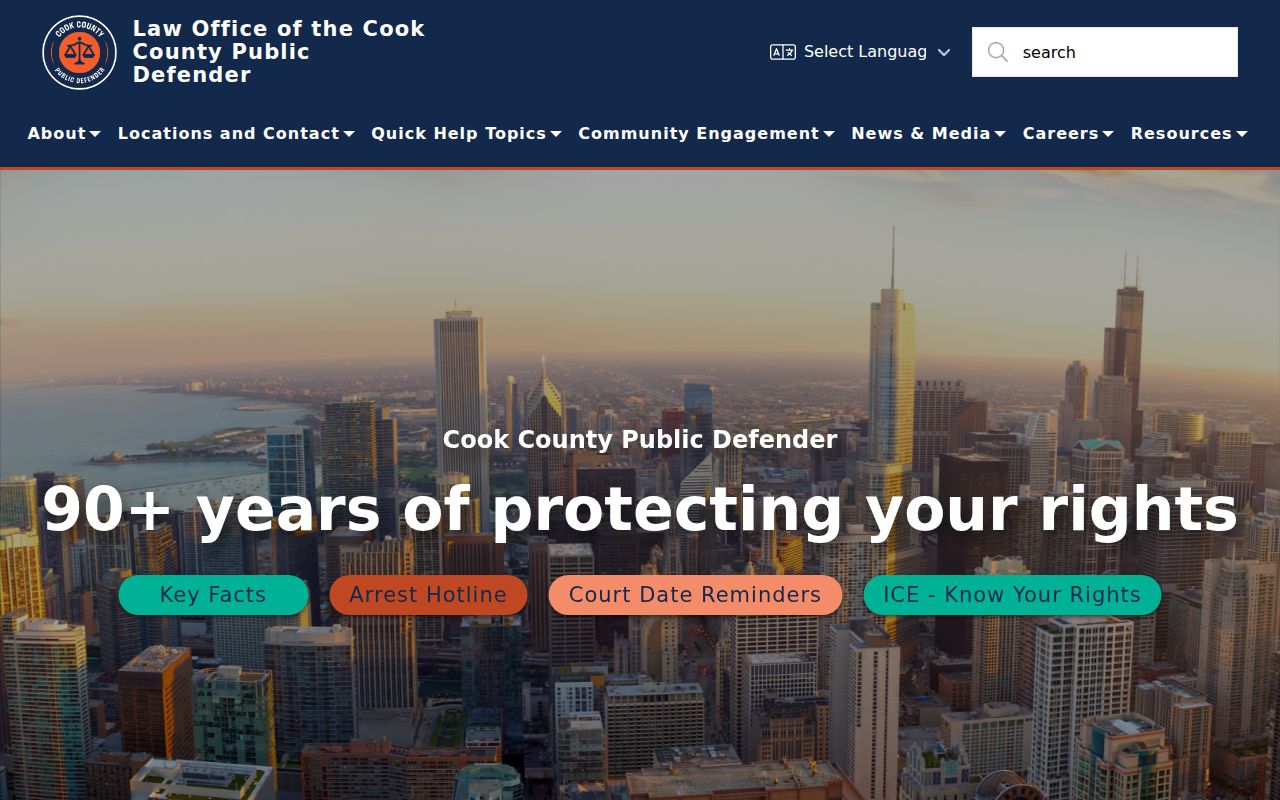
People seeking their own defense file should contact counsel. A public requester seeking the official case outcome should use the clerk.
Chicago Police Report or OEMC Record
Chicago’s emergency communications records are another custodian trap. A CPD incident report belongs to police. A 911 recording or computer-aided dispatch record belongs to the Office of Emergency Management and Communications, not automatically to CPD. Body-camera records can require review and redaction under Illinois FOIA and the Law Enforcement Officer-Worn Body Camera Act.
Write a request around the record actually sought. Include date, time, location, report or event number, involved-person information, and preferred format. Send police-created material to CPD’s FOIA officer at 3510 S. Michigan Ave., Chicago, IL 60653, or foia@chicagopolice.org. Route 911 and dispatch material to OEMC. This distinction often matters more than the wording “criminal record.”
Public Access Rules in Chicago
Chicago police records are subject to the Illinois Freedom of Information Act, but private, victim, juvenile, medical, and active-investigation details may be redacted or withheld under a specific exemption. Court records follow clerk procedures, court rules, and electronic-access policy. Public ISP conviction information follows the Uniform Conviction Information Act.
Key Statutes:
Illinois FOIA, 5 ILCS 140 presumes public-body records open while allowing lawful exemptions and redaction.
Uniform Conviction Information Act, 20 ILCS 2635 makes ISP conviction information public through uniform procedures.
Clerks of Courts Act, 705 ILCS 105/16 places court-record maintenance and copies with circuit clerks.
A noncommercial Illinois FOIA request normally receives a response within five business days, subject to a permitted extension. If a denial seems improper, the Illinois Attorney General Public Access Counselor offers a review channel. For court records, use the clerk process rather than sending a generic police request.