
Cook County Criminal Court Cases
The Clerk of the Circuit Court Criminal Department maintains the judicial file for Cook County criminal court cases. Illinois has no separate modern city criminal court system like the collection of local courts that existed before unification in 1964. Felonies, misdemeanors, preliminary hearings, and local ordinance matters all become Circuit Court records when they are filed. The clerk, not the police department or Sheriff, is the custodian for complaints, indictments, court orders, docket events, and final dispositions.
Serious Chicago felony matters center on the Criminal Division at the George N. Leighton Criminal Court Building. Chicago misdemeanor and early felony proceedings may begin in branch calls. Suburban Cook County criminal cases route by geography to Skokie, Rolling Meadows, Maywood, Bridgeview, or Markham. A police report can stay with the arresting city while the resulting court case goes to the correct district clerk. That split is why an arrest record and a court file must be searched as separate sources.
Cook County Court District Routing
The Illinois Courts directory for Cook County is the best current source for courthouse routing. Chicago files use the First Municipal District structure. Northern suburbs route to Skokie, northwestern suburbs to Rolling Meadows, western suburbs to Maywood, southwestern suburbs to Bridgeview, and southern suburbs to Markham. Cicero matters generally use Maywood. An Elgin case may belong in Rolling Meadows or Kane County, depending on where the event occurred.
| District | Criminal records location | Main phone |
|---|---|---|
| First | Leighton, 2600 S. California Ave., Chicago | 773-674-3160 |
| Chicago file review | Daley Center, 50 W. Washington St., Room 1006 | 312-603-5030 |
| Second | 5600 Old Orchard Rd., Skokie | 847-470-7200 |
| Third | 2121 Euclid Ave., Rolling Meadows | 847-818-3000 |
| Fourth | 1500 Maybrook Dr., Maywood | 708-865-6060 |
| Fifth | 10220 S. 76th Ave., Bridgeview | 708-974-6288 |
| Sixth | 16501 S. Kedzie Pkwy., Markham | 708-232-4551 |
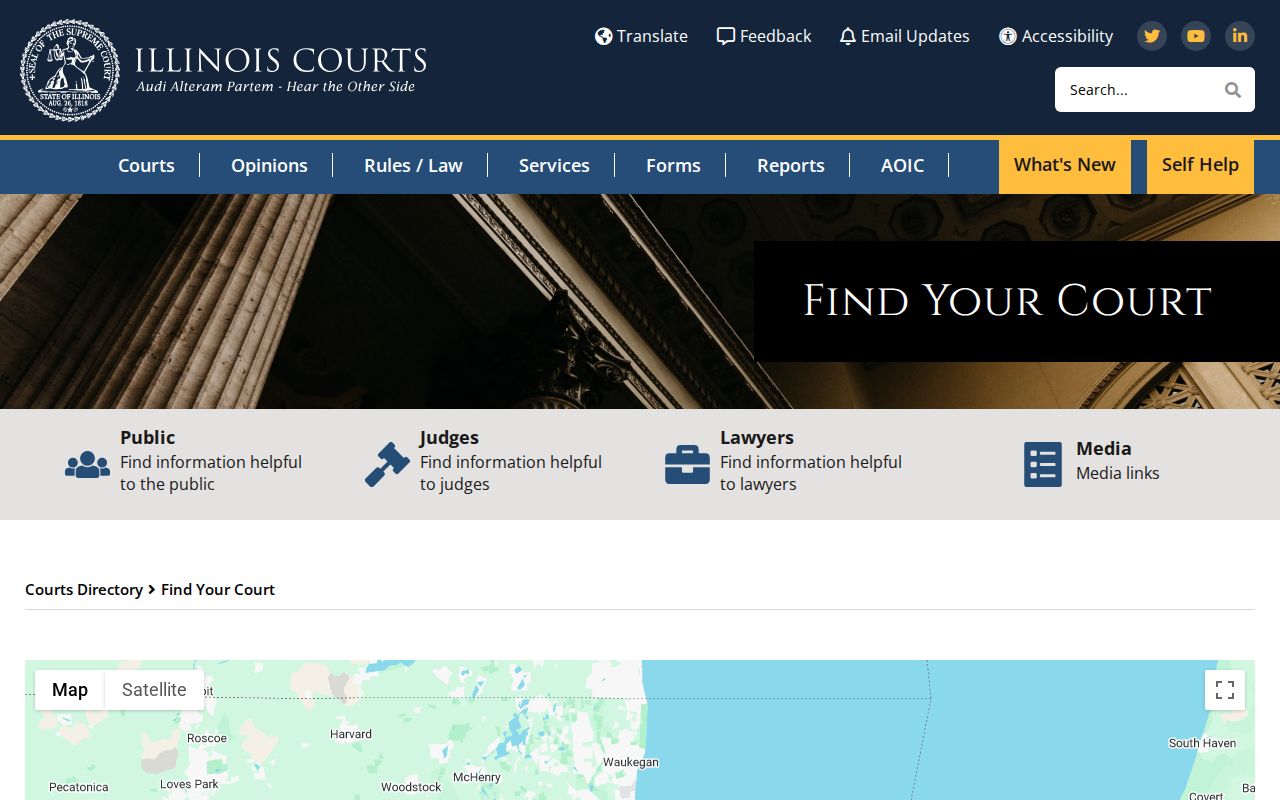
The official Illinois Courts directory image shows how the six-district structure shapes a Cook County criminal case search.
Confirm the listed phone and department before travel because offices within each courthouse use separate extensions and service counters.
Searching Cook County Case Records
Begin at the Clerk’s official Case Look Up gateway. A case number is the strongest key. For a name search, use the legal spelling and verify identity with date of birth, arrest date, district, filed charge, or another known fact. Some portal functions distinguish public users from registered attorneys and justice partners. An empty result does not prove that no file exists, especially for older, sealed, recently filed, or misspelled records.
- Open Case Look Up and choose the available criminal case path.
- Enter the case number, or search by last and first name when no number is known.
- Narrow the results by date, division, case type, district, or date of birth when the public mode offers those fields.
- Open the docket and trace each count through its final disposition and sentence.
- Contact the correct clerk counter for an unscanned filing, full file review, copy, or certified disposition.
| Field | Type | Use | Search note |
|---|---|---|---|
| Case Number | Text | Primary key | Keep all year and division characters. |
| Last Name | Text | Name search | Use the legal surname. |
| First Name | Text | Narrowing | Helps separate common names. |
| Date of Birth | Date | Identity check | May depend on access mode. |
| Division or Case Type | Filter | Scope | Choose criminal when offered. |
| District or Date Range | Filter | Narrowing | Useful for suburban and older cases. |
Cook County Files in Room 1006
Online entries may index a filing without providing its PDF. For a Chicago Criminal Department file, public inspection goes through the Court File Request Counter at the Richard J. Daley Center, 50 West Washington Street, Room 1006. Valid photo identification is required. Files from the past four years are generally onsite and may be reviewed the day requested unless the file is in court. Older records can require archive retrieval, so a call to the criminal desk can prevent a wasted trip.
A certified disposition has a narrower purpose than a full file. The clerk asks for the defendant’s name, date of birth, and arrest date. Chicago’s Criminal Department issues Chicago dispositions only. Suburban Cook County criminal case records must go to the district where the matter was filed. The Clerk’s live chat operates on weekdays from 8:30 a.m. to 4:30 p.m. and can help identify the proper counter before a visit.
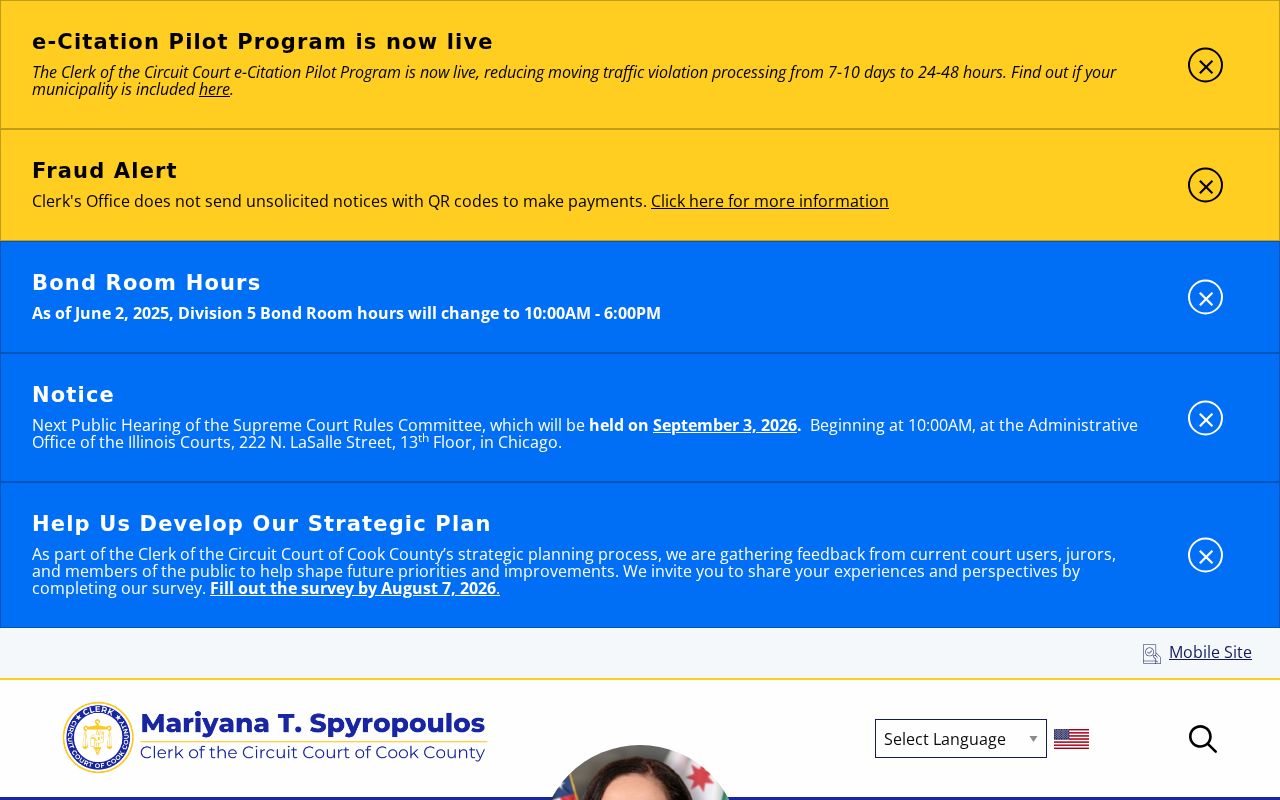
The official Criminal Department page illustrates the clerk’s file and disposition route.
That clerk channel supplies the judicial record, while police and jail offices retain their own arrest and booking material.
Inside a Cook County Case File
A Cook County criminal case file can contain far more than the charge shown in a short search result. Read the header first for the case number, filing date, district, status, courtroom, and judge where public. Then check the party and charge rows. Filed charges may cite an Illinois statute, AOIC description, offense class, count number, and amendment status. Each count can reach a different outcome.
| Case Number and Court | Identifies the file, division, district, and Cook County venue. |
|---|---|
| Charging Document | Complaint, information, or indictment stating the charge prosecuted in court. |
| Docket Entries | Appearances, motions, orders, continuances, warrants, pleas, trials, and other events. |
| Pretrial Record | Release or detention orders, conditions, and older bond documents. |
| Disposition | Conviction, dismissal, nolle prosequi, acquittal, or another result for each count. |
| Sentence | Custody, probation, conditional discharge, fines, restitution, and related terms when ordered. |
Personal identifiers and protected victim, juvenile, sealed, or expunged information will not appear in an ordinary public view.
Cook County Case Outcome Terms
The arrest charge is not always the filed charge, and the filed charge is not the result. Prosecutors may amend a count or decline to proceed. Reading the final docket means distinguishing a guilty judgment from outcomes that end without conviction. These plain terms help decode Cook County criminal court cases.
- Nolle prosequi
- The prosecutor formally chooses not to continue a charge at that time.
- Dismissed
- The court terminates the charge without a conviction on that count.
- Acquitted
- A not-guilty result after trial.
- Convicted
- A judgment based on a guilty plea or a finding of guilt.
- Mittimus
- A court order directing custody or execution of a sentence.
Note: A docket event can describe one count only, so check the disposition of every count before stating the case outcome.
How a Criminal Case Moves
After an arrest, a prompt initial appearance and pretrial review address custody or release. The Cook County State’s Attorney screens the police submission, files a complaint or information, or seeks a grand jury indictment. A felony can begin at a preliminary-hearing branch before transfer to the Criminal Division. At arraignment, the charge is stated and a plea is entered. Discovery, motions, and court dates then lead toward a negotiated plea or trial.
Case flow: Charges Filed › Arraignment › Pretrial › Plea or Trial › Disposition › Sentencing
A guilty result proceeds to sentencing. A dismissal, nolle prosequi, or acquittal ends that count without conviction. Appeals from Cook County go to the Illinois Appellate Court, First District, and some matters can reach the Illinois Supreme Court. Problem-solving courts may address drug treatment, mental health, veterans, restorative work, or diversion, but treatment files are not made public merely because a related order appears on the docket.
Cook Court File or ISP Response
A Cook County court search and an Illinois State Police conviction response answer different questions. The clerk’s file can show a pending case, a dismissal, an acquittal, motions, and the sentence imposed in Cook County. The ISP Uniform Conviction Information Act channel provides public Illinois conviction information held by the state repository. It can span counties, but it does not reproduce the complete local court file or publicly disclose all non-conviction history.
For identity-sensitive review of your own state record, ISP directs people to Access and Review through a licensed live-scan fingerprint vendor. A name match alone can join the wrong person to a file. If court and repository results differ, correct the source: ask the clerk about the judicial disposition and ISP about the repository cycle. The broader Cook County arrest lookup explains how police and jail records fit before the filed case.
Case Record Access and Restrictions
Cook County court records are generally open through clerk and court procedures, but online access does not expand what the law makes public. The Clerks of Courts Act assigns record and certification duties to circuit clerks. Illinois court rules and electronic-access policy govern remote views. Juvenile matters, sealed or expunged cases, protected victim information, private identifiers, and some sensitive or pending materials can be withheld or redacted.
A missing online result should lead to the proper Cook County criminal desk, not to a generic Sheriff FOIA. The Sheriff cannot supply a judicial case file. When an eligible record has been cleared, the Illinois Courts expungement and sealing forms provide the mandatory statewide form set.
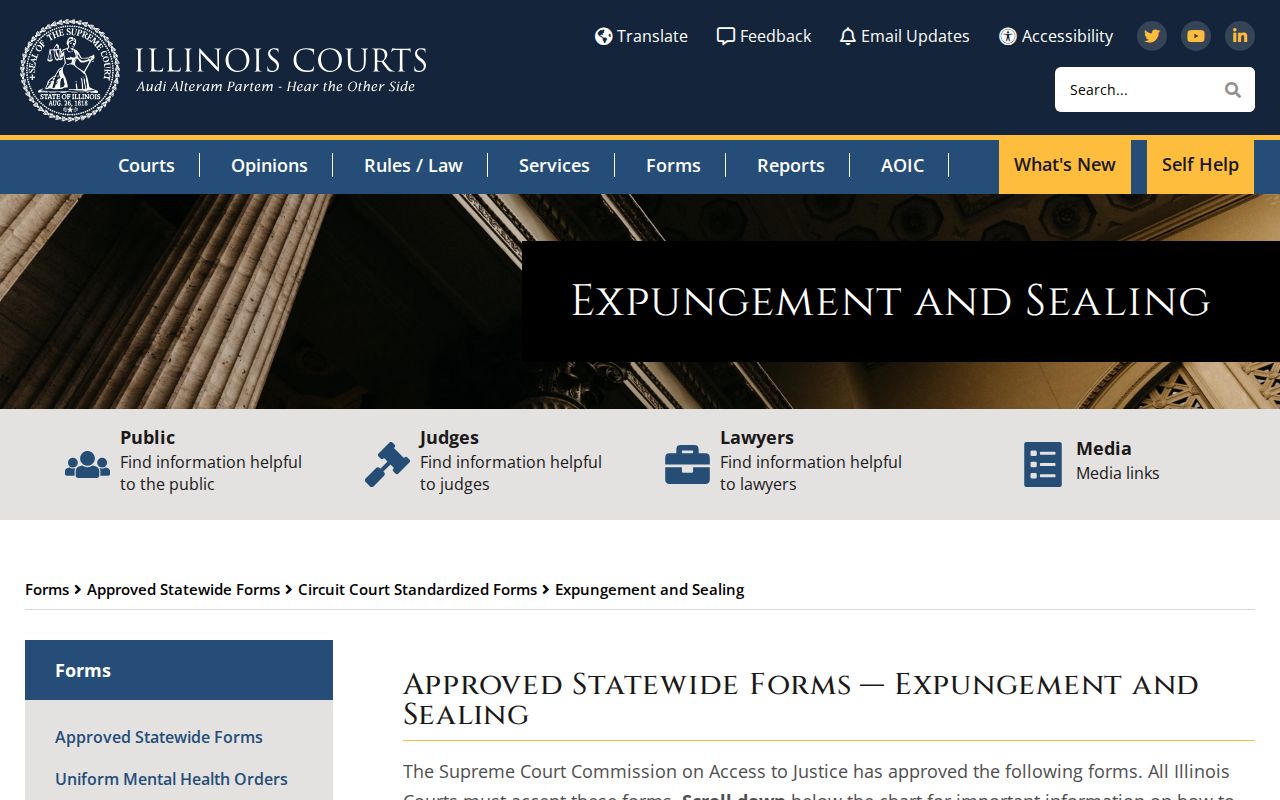
The filing and any later verification still run through the Circuit Court district connected to the Cook County case.
Older Cook County Criminal Cases
Cook County’s current portal does not erase the county’s long paper history. If a Chicago criminal file is older than the four-year group generally held onsite, contact the Daley Center counter with the case number, defendant name, date of birth, and arrest date. Staff can identify whether archive retrieval is required. For a suburban case, start with the correct municipal district rather than the Chicago counter.
Older terminology also needs care. Records created before Illinois ended cash bail for new cases may show cash bond, surety, refund, or bond-slip fields. Newer files emphasize release conditions and detention hearings under the Pretrial Fairness Act. Those differences reflect the age of the record, not an error. A certified disposition is the sound final source when the online index is brief or an old term is unclear.