
Checking Criminal History in Cook County
Start by defining the record needed. A current custody question belongs with the Cook County Sheriff. A Chicago Police arrest from 2014 forward belongs in CPD’s adult arrest search. A charge, hearing, disposition, or sentence belongs with the Clerk of the Circuit Court. Public statewide Illinois conviction information belongs in ISP CHIRP. State prison and disclosed parole status belong in the IDOC search. One source cannot answer all five questions.
- Gather the full name, exact birth date, known aliases, arrest date, and any CB, IR, IIC, booking, or case number.
- Search the Cook County Case Look Up gateway for filed cases and final outcomes.
- Check the arresting police agency and Sheriff locator separately for an arrest report or recent custody.
- Read each charge through disposition and sentence. Do not treat an arrest or filing as a conviction.
- Ask the correct clerk or records unit for unscanned files, certified copies, or a formal public-record request.
- Use ISP CHIRP for the public statewide conviction product or fingerprint-based Access and Review for your own state record.
The Cook County government gateway helps identify county departments.
Use that directory to reach official offices, then confirm which office created or legally maintains the specific record.
Four Cook County Record Systems
Cook County criminal history is easiest to understand as four connected systems. Police create incident and arrest records. The Sheriff creates county jail booking and custody records. The Circuit Clerk maintains the judicial case. ISP receives fingerprint-linked arrest cycles and later dispositions. Each layer has a different time line, legal scope, and search key.
| System | Best for | Key limit |
|---|---|---|
| Police agency | Incident narrative and arrest facts | Agency-specific, not a court outcome |
| Cook County Sheriff | County booking and current custody | Not every arrested person completes jail booking |
| Circuit Court Clerk | Filed charge, docket, disposition, sentence | Cook County cases only |
| ISP Bureau of Identification | Public Illinois conviction information | Not a full public non-conviction rap sheet |
Record flow: Police arrest › booking and fingerprints › prosecutor filing › Circuit Court disposition › ISP repository update.
False negatives often come from crossing these layers too soon. A police arrest can exist before jail intake. A person can leave court before full county booking. Prosecutors can file a charge that differs from the arrest label, and a dismissal will not appear in a public conviction-only response. Date of birth, arrest date, case number, and agency identifiers help reconcile those gaps. For any fact that matters, return to the office that owns that stage and ask for its source record.
The Illinois Courts case-path resource shows where the judicial phase fits in that larger record flow.
The court path starts after the police event and becomes the source for filed charges, orders, outcomes, and sentences.
Illinois Official Background Checks
The Illinois State Police Bureau of Identification maintains the central criminal-history repository. Its Criminal History Information Response Process, or CHIRP, is the electronic route for public conviction inquiries under the Uniform Conviction Information Act. A user creates an account, chooses the product, supplies subject information, pays the charge displayed in the live portal, and retains the response identifier. The accessible official research did not expose a reliable current fee outside that transaction, so verify the amount at order time.
| Official channel | Coverage | Requirement or fee |
|---|---|---|
| Cook court lookup | Cook Circuit case data | Search generally free; copies may cost |
| ISP CHIRP | Illinois public conviction information | Account and payment; verify current charge |
| ISP Access and Review | Your fingerprint-linked Illinois record | Approved live scan, ID, and varying vendor charges |
| FBI Identity History Summary | Your FBI-linked identity history | Fingerprints and current federal ordering charge |
The official CHIRP entry screen shows the account-based access point.
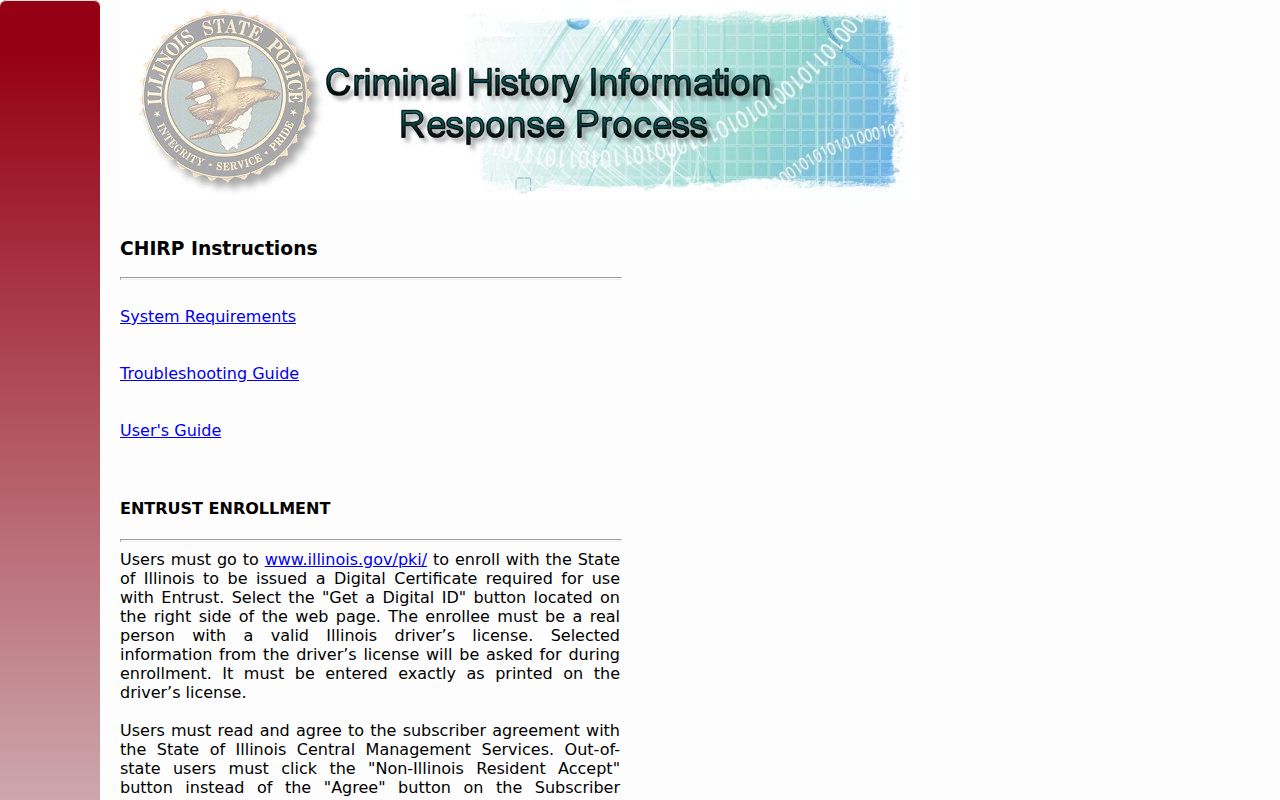
CHIRP covers the state conviction product, not the full Cook County police report or every court filing.
Cook County CCCPortal Search
CCCPortal is a court search, not a statewide rap sheet. Follow the Clerk’s official Case Look Up page and use a case number when known. For names, enter the legal spelling and compare date of birth, arrest date, filing year, district, and charge details. Some functions differ for public users and registered justice partners. A result can show a pending case, dismissal, or acquittal that a public ISP conviction response will not show.
| Portal field | Type | How it helps |
|---|---|---|
| Case Number | Text | Strongest case key |
| Last Name | Text | Main public name input |
| First Name | Text | Narrows common names |
| Date of Birth | Date | Confirms identity where available |
| Division, date, or district | Filter | Narrows the Cook County file set |
The official Clerk case-lookup gateway provides the route into Cook County case data.
When the docket lists an event but not its document, ask the correct Clerk counter to inspect or copy the underlying file.
Criminal Record Types
Record labels matter because they identify both the event and the custodian. A Cook County police report remains with its police department even after the person enters county custody. The Sheriff’s booking record does not replace the prosecutor’s filed charge. The court disposition does not reproduce the full police narrative.
- Incident and arrest reports: police-created narratives, probable-cause facts, charges at arrest, and agency identifiers.
- Booking records: Sheriff intake, fingerprints, photograph when taken, custody, release, and IIC details.
- Criminal court files: complaints, indictments, warrants, orders, motions, pleas, outcomes, and sentences.
- Conviction responses: public statewide conviction information held by ISP under UCIA.
- Custody and supervision records: county jail, IDOC prison, Cook probation, and state parole records with different limits.
- Registry listings: qualifying registration information, not a complete Cook County criminal history.
Cook County Criminal Records Campus
The California Avenue area is Cook County’s physical center for serious criminal matters. The George N. Leighton Criminal Court Building at 2600 South California Avenue houses the Criminal and Pretrial Divisions. Nearby jail operations create a close physical link between custody and court, but the records remain distinct. Public file review for Chicago Criminal Department cases goes to the Daley Center, Room 1006, not simply to the Leighton courtroom.
The Illinois Courts Leighton listing gives official building details and public resources.
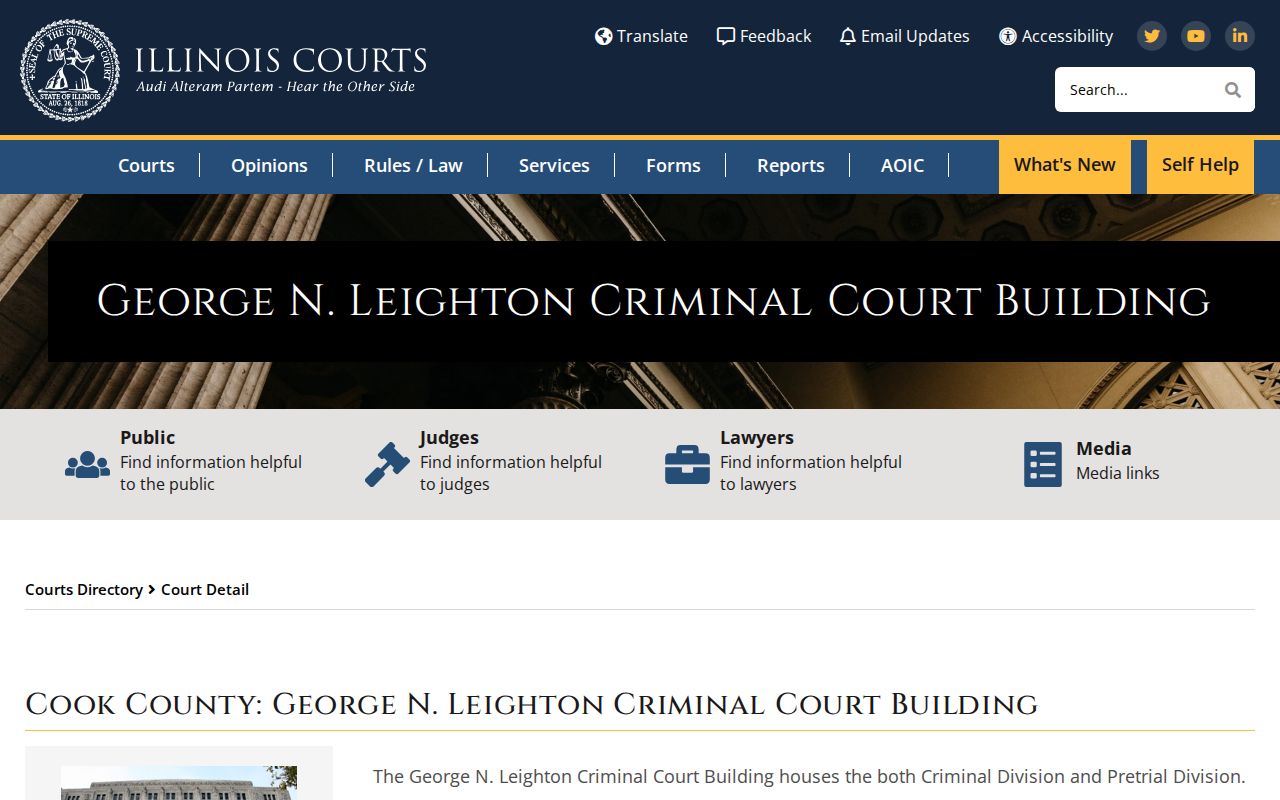
The building offers a law library, child waiting room, disability access, language services, and public facilities that can help with court attendance and record use.
Inside a Cook County Criminal Record
The fields depend on the record. An ISP cycle can include identity data, fingerprints, arresting-agency codes, arrest charges, a Cook County case number, disposition, and sentence. A court file adds judges, attorneys, hearings, motions, and orders. A booking profile can add an IIC number, intake and release times, housing, charge references, and a photograph when taken and publishable.
| Name and Identifiers | Legal name, aliases, birth date, state or FBI numbers, and record-specific keys. |
|---|---|
| Arrest and Booking | Date, agency, location, initial charge, CB or IIC number, custody, and release. |
| Charges | Arrest accusation or court-filed count, statute, class, and amendment status. |
| Disposition | Convicted, dismissed, nolle prosequi, acquitted, or another count-level outcome. |
| Sentence | Custody, probation, discharge, fines, restitution, and related conditions. |
| Restricted Fields | Private identifiers, juvenile material, victim data, medical facts, and sealed content. |
Missing from Cook County Jail
An empty jail lookup does not prove that no arrest occurred. The Cook County Sheriff says public locator results normally appear four to six hours after booking and processing. A person released after bond or pretrial court may never complete full CCDOC booking or have a Sheriff photograph. Search CPD for a qualifying Chicago arrest, call 773-674-5245, check the Circuit Clerk for filed charges, and request the arrest report from its police custodian.
The Cook County Sheriff website routes users to custody and corrections services.
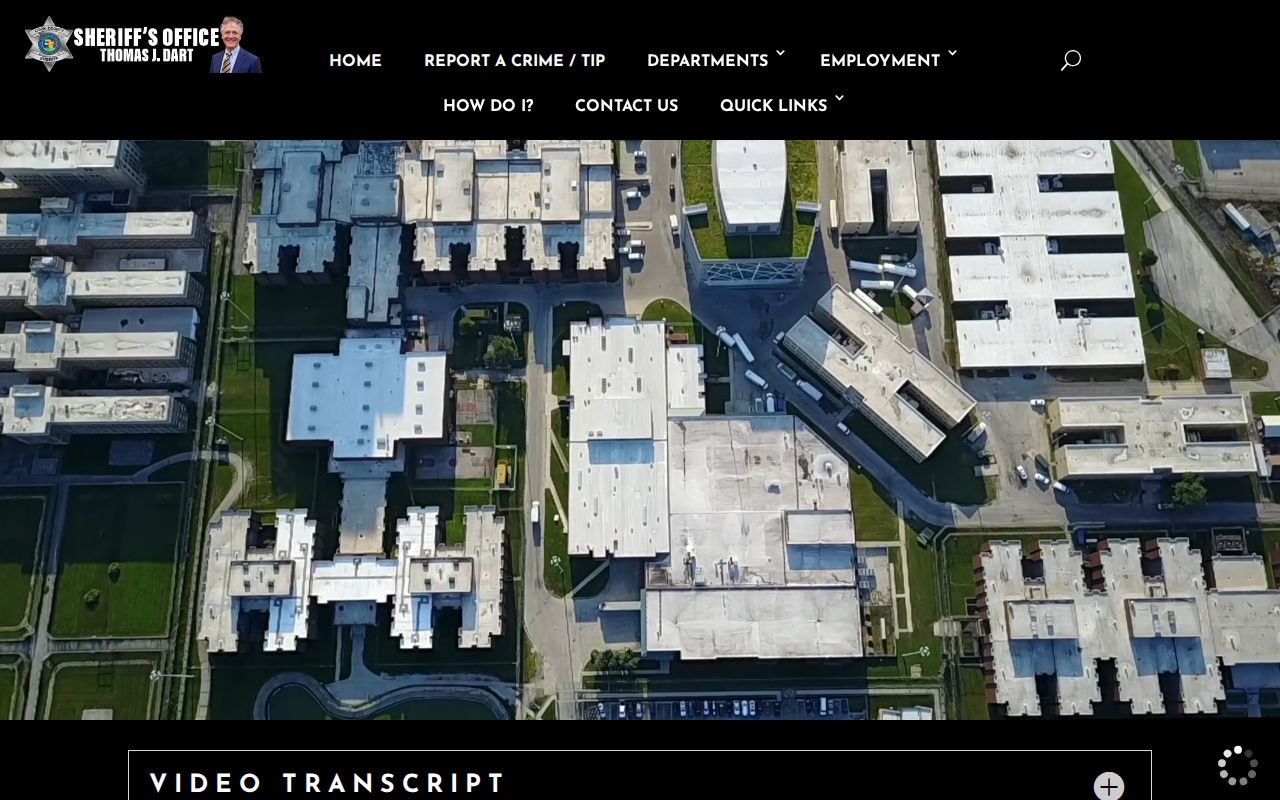
The Sheriff has no verified app-only custody or warrant database, so avoid unofficial apps with similar names.
Public Access Laws in Illinois
Illinois law opens many records while preserving exemptions, redactions, and court controls. Ask the office that created or maintains the record. A Sheriff FOIA cannot produce a CPD narrative, Circuit Court file, or full ISP history. Public access also does not permit harassment, threats, identity abuse, or misuse of protected information.
Key Illinois laws:
5 ILCS 140 sets FOIA request, response, fee, redaction, and exemption rules.
20 ILCS 2635 makes ISP conviction information public through uniform procedures.
705 ILCS 105/16 assigns court-record and certification duties to circuit clerks.
20 ILCS 2630/5.2 governs adult expungement and sealing.
730 ILCS 152/115 governs the public registry database.
A noncommercial FOIA request generally receives a response within five business days, subject to a lawful extension. Denials must cite an exemption and review rights.
Cook County Sheriff FOIA Limits
The Sheriff’s GovQA request page accepts FOIA and subpoena submissions. Mail requests go to the FOIA Officer at 50 West Washington Street, Room 704, Chicago, and walk-in delivery goes to Room 701. Describe the component, record type, dates, person, and booking or case identifiers. The Sheriff can address disclosable Sheriff’s Police and corrections records, but expressly routes complete history inquiries to ISP BOI.
Electronic records are often free apart from media costs. Illinois FOIA generally makes the first 50 pages of standard black-and-white copies free, then permits the statutory rate. Certification, special media, or unusual formats may cost more. No one flat Sheriff fee covers every record.
Sealed, Expunged, and Restricted Records
Illinois distinguishes expungement from sealing. Expungement generally removes or destroys eligible records under the order. Sealing hides eligible material from ordinary public access while preserving restricted official access. Juvenile, protected victim, medical, and confidential investigative records follow separate limits. An online absence may result from a valid restriction, not a portal fault.
Eligibility is record-specific. An arrest that never led to a conviction, a dismissed count, and a conviction do not all follow the same path. The correct Cook County district matters because the petition belongs with the circuit court record. Filing fees may apply, and Illinois Courts provides fee-waiver forms for eligible filers. Court staff can explain filing mechanics but cannot choose a legal remedy for someone.
Illinois Courts supplies mandatory statewide forms for circuit courts. A person should identify every police and court case, file in the proper district, serve the agencies named in the instructions, and keep the final order. After processing, verify the source systems separately because police, Clerk, and ISP updates may not occur at the same moment.
Use the final signed order when asking a source agency to investigate a record that still appears. The statewide court form library supplies the current petition, notice, order, and fee-waiver forms.
Clearing a Cook County record is also a multi-office process. The petition must list the arresting agency, arrest date, case number, charges, disposition, and the specific relief requested for each item. The Clerk sends notice to the State’s Attorney, Illinois State Police, arresting agency, and other custodians identified by the forms. An objection or eligibility dispute can lead to a hearing; otherwise, the court may decide from the filed papers. A signed order is the authority for later agency updates, so retain certified copies rather than relying on a portal screenshot.
Verification should happen at the sources that once displayed the record. Recheck CCCPortal, the arresting department’s public interface when one exists, and a fingerprint-based ISP Access and Review response after the agencies have had processing time. If one system still shows the cleared event, send that custodian the certified order and identify the exact case or arrest cycle. Refiling the same Cook petition does not correct a separate database by itself. This source-by-source check is especially important when a Chicago arrest, county case, and state repository entry were created on different schedules.
Some records remain restricted for reasons unrelated to a clearing petition. Juvenile files, protected victim details, Social Security numbers, medical or mental-health records, and sensitive investigative facts are governed by their own confidentiality or redaction rules. Public users should not treat the absence of those details as evidence that the underlying office has lost a file.
Cook County Warrant Record Route
Cook County has no safe, complete public name search for every active warrant. A warrant event may appear in CCCPortal, and the Clerk publishes misdemeanor warrant help. Sheriff FOIA can address disclosable Sheriff-held material, but sensitive or unexecuted records may be withheld. Confirm through the issuing court, counsel, or law enforcement. Never approach a wanted person.
Use this fallback chain: case lookup, correct district criminal clerk, legal advice or court appearance planning, agency confirmation where appropriate, and IDOC Wanted Fugitives for state-supervision fugitives. A warrant remains active until the issuing court recalls or quashes it and the connected systems update. Keep a certified order after resolution.
Cook Jail to IDOC Records
County jail and state prison are separate custody layers. The Sheriff locator covers Cook County detention. IDOC Offender Search covers state custody and disclosed parole information. After a transfer, a person may leave the county locator and appear in IDOC with an IDOC number, institution, status, admission or release date, and sentencing data where public. Cook Adult Probation is a court department, while the Illinois Prisoner Review Board sets parole or mandatory-supervised-release conditions and IDOC provides field supervision.
The official IDOC search gateway displays the state corrections routes.
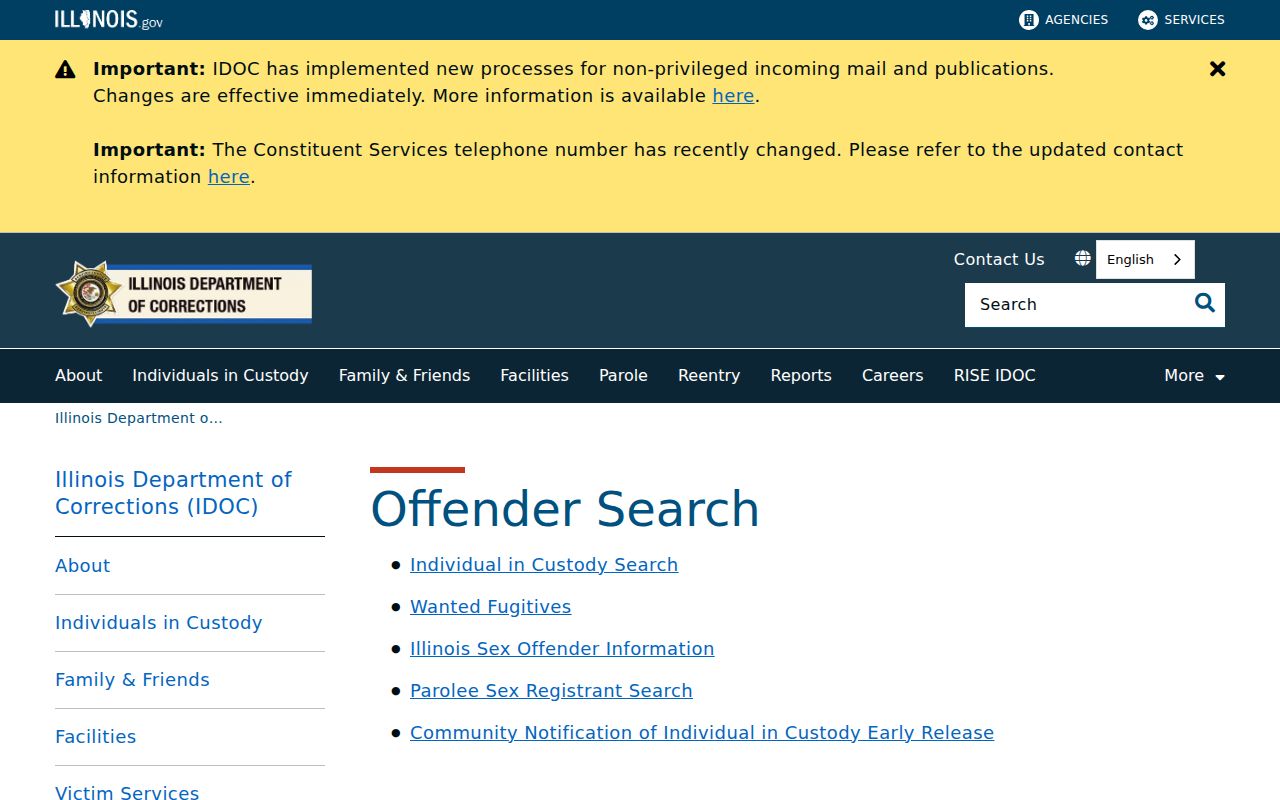
Search the Cook court case as well because the docket is the best source for the sentence that produced custody or probation.
Cook County Criminal Records by City
Police records stay with the city agency that created them, while filed criminal cases move into the unified Circuit Court. Chicago offers a CPD adult arrest search. Elgin spans Cook and Kane Counties, so incident location controls the court route. Cicero keeps its own police reports, while filed western suburban cases generally route to Maywood. These city pages preserve those local distinctions.
Chicago Criminal Records
CPD arrest and report channels, then Cook County court and jail routing.
Elgin Criminal Records
A two-county city where incident location determines Cook or Kane jurisdiction.
Cicero Criminal Records
Town police records with Cook County court routing through Maywood.
Beyond Cook County Criminal Records
The ISP criminal-history information page explains the statewide conviction layer.
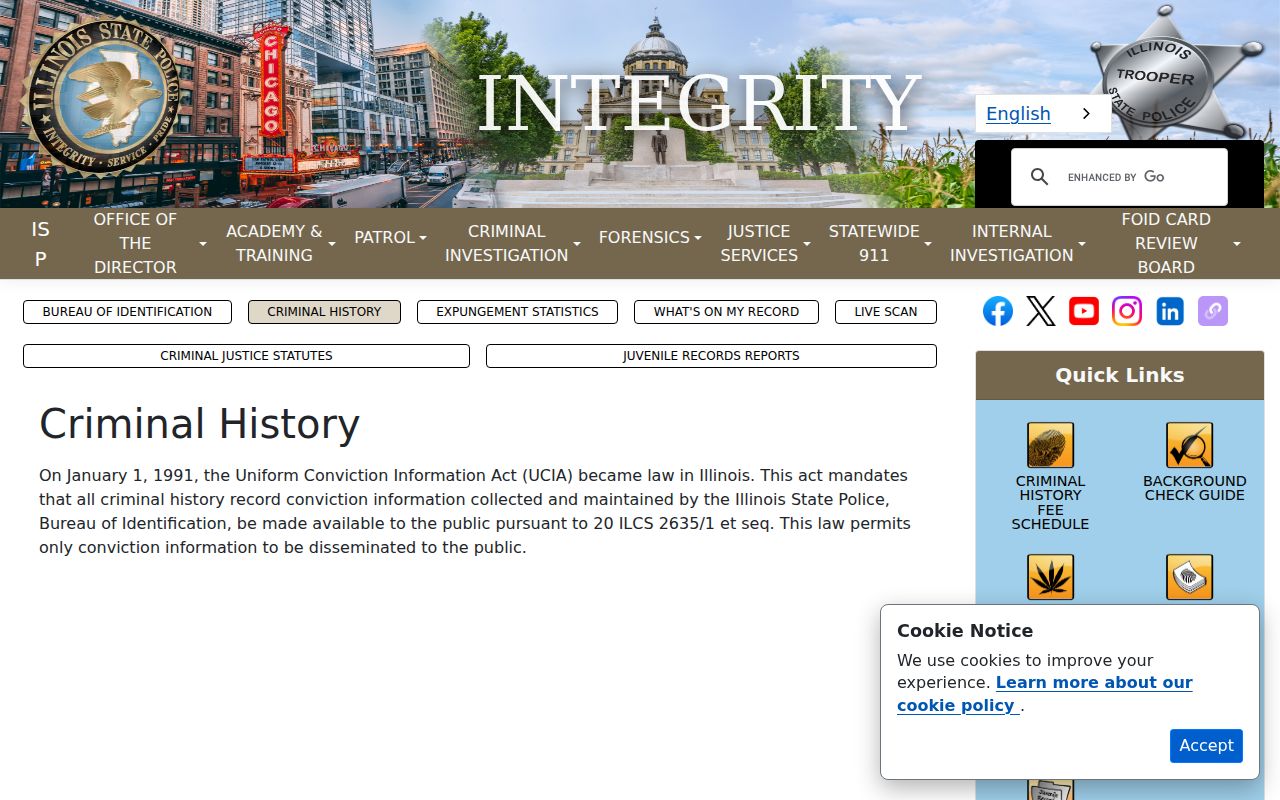
That response can cover Illinois convictions outside Cook County, while a county docket remains local and more detailed.
Federal cases are separate. Cook County lies in the Northern District of Illinois, and federal dockets use PACER rather than CCCPortal. Federal prison custody uses the Bureau of Prisons locator. A person may request their own FBI Identity History Summary with fingerprints, but that is not a Cook County court search.
The official PACER service is the federal court-record gateway.
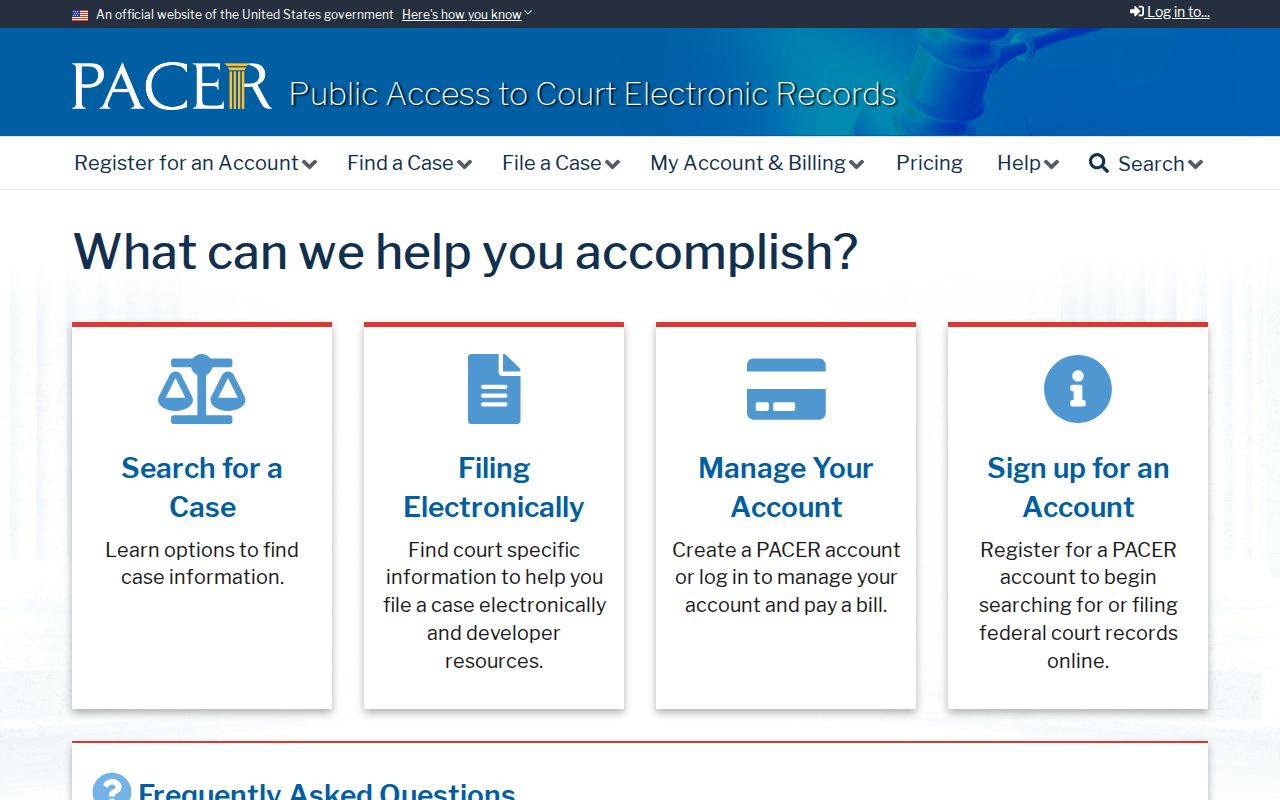
PACER charges and access rules should be checked on its current fee page before ordering documents.